White Supremacy in Peril
Many Americans have been puzzled at the priority given to white South African farmers as immigrants to the United States. What follows is a brief thumbnail history by way of explanation.
President Trump is welcoming refugees into the United States, almost exclusively Afrikaners, white people from South Africa, whom he says are victims of a genocide in that country. At the start of the second Trump administration in 2025, the president set an upper limit of 7,500 immigrants per year to be allowed into the United States. In the first sixteen months, 70% of those granted immigration status were white Afrikaners. In late May 2026, the president raised the limit by 10,000 with the condition that this increase would apply only to Afrikaners.
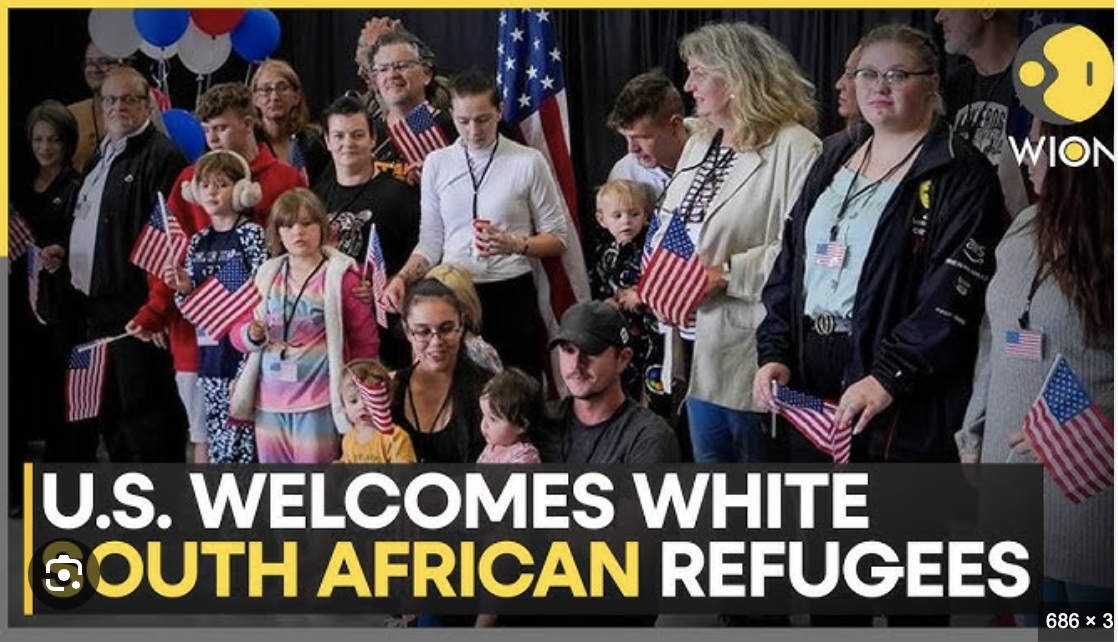
Afrikaner families newly arrived at Dulles Airport, Washington DC, 13 May 2025.
The press photographs show well-clothed apparently healthy adults and their blond children in good spirits, as much as might be expected after a transatlantic flight into a new country. The South African president, leading academics and clergy (black and white) and the actual statistics are all in accord to refute the assertion of genocide — the intentional erasure of an entire people — and even the much lesser charge that Afrikaners suffer more than any other group in South Africa the effects of social or political violence. Indeed, socially and economically, Afrikaners as a subset of the white population retain a position of privilege in the post-apartheid society.
So what’s going on? Apart from this being one of many acts of white supremacy being played out by the current administration for the benefit of a bloodthirsty base, what else do we need to know?
Trump is not entirely wrong in depicting Afrikaners as an oppressed people but he is about 200 years out of date and has fingered the wrong oppressors. A lot of history has happened in those intervening years.
In a nutshell: Dutch settler-colonisers came to southern Africa (what we now know as the Cape) in 1652. In making a place for themselves and to begin farming, the newcomers fought for space with the indigenous inhabitants, the Khoisan in the south, other Bantu-speaking groups further inland. The British arrived in the 1820’s with a similar objective of settling the land and safeguarding the Cape as a vital staging post in their imperial expansion to India, China and elsewhere. Thus, by the early to mid-nineteenth century the stage was set for a three-way competition for land and power between the two colonial powers and indigenous populations. In the 1870’s the Cape Frontier wars and the Anglo-Zulu wars were essentially between the white colonisers and African forces. But prior to this period of colonialist violence and dispossession the British were forcing the Dutch inland causing the latter to abandon the Cape and to form their own territorial spheres in the Orange Free State and the Transvaal[i]. A founding narrative of Afrikanerdom is the Great Trek of 1835, a playing out of the Calvinist belief that they are God’s chosen people settling a land promised in the scriptures, against savage forces.
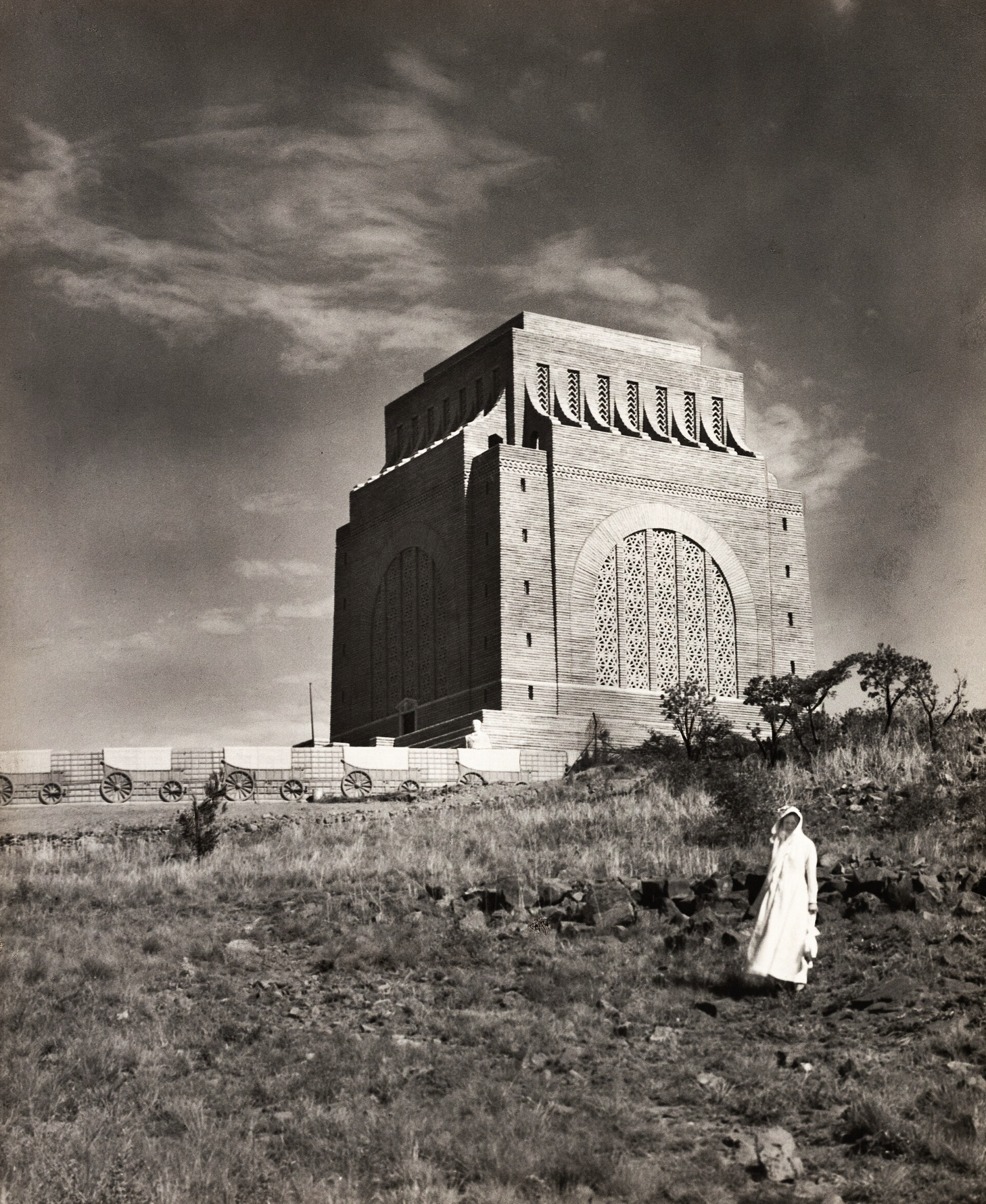
The Voortrekker Monument outside Pretoria commemorates the Great Trek of the 1830’s. A historic frieze celebrates the establishment of Christian civilization over local peoples and a hostile environment, against great odds.
The Voortrekker Monument outside Pretoria commemorates the Great Trek of the 1830’s. A historic frieze celebrates the establishment of Christian civilization over local peoples and a hostile environment, against great odds.
Catalyzed by the discovery of gold and diamonds, the competition between the white colonial powers, culminated in the Boer War which played out in two phases, 1880–81 — which ended in a draw, the Boers surviving the British onslaught; and 1899–1902 during which the British gained final dominance managing to sequester the Dutch mainly in the Free State and Transvaal. The British pursued a scorched earth policy resulting in massive slaughter and dispossession. It was also in this campaign that the British introduced concentration camps, herding the dispossessed population of Boers behind fences and into huts, on forced starvation[ii]. 28,000 white men, women and children died in concentration camps under this policy. In the history of white grievance what is not often recognized is that an additional 20,000 Africans also died.
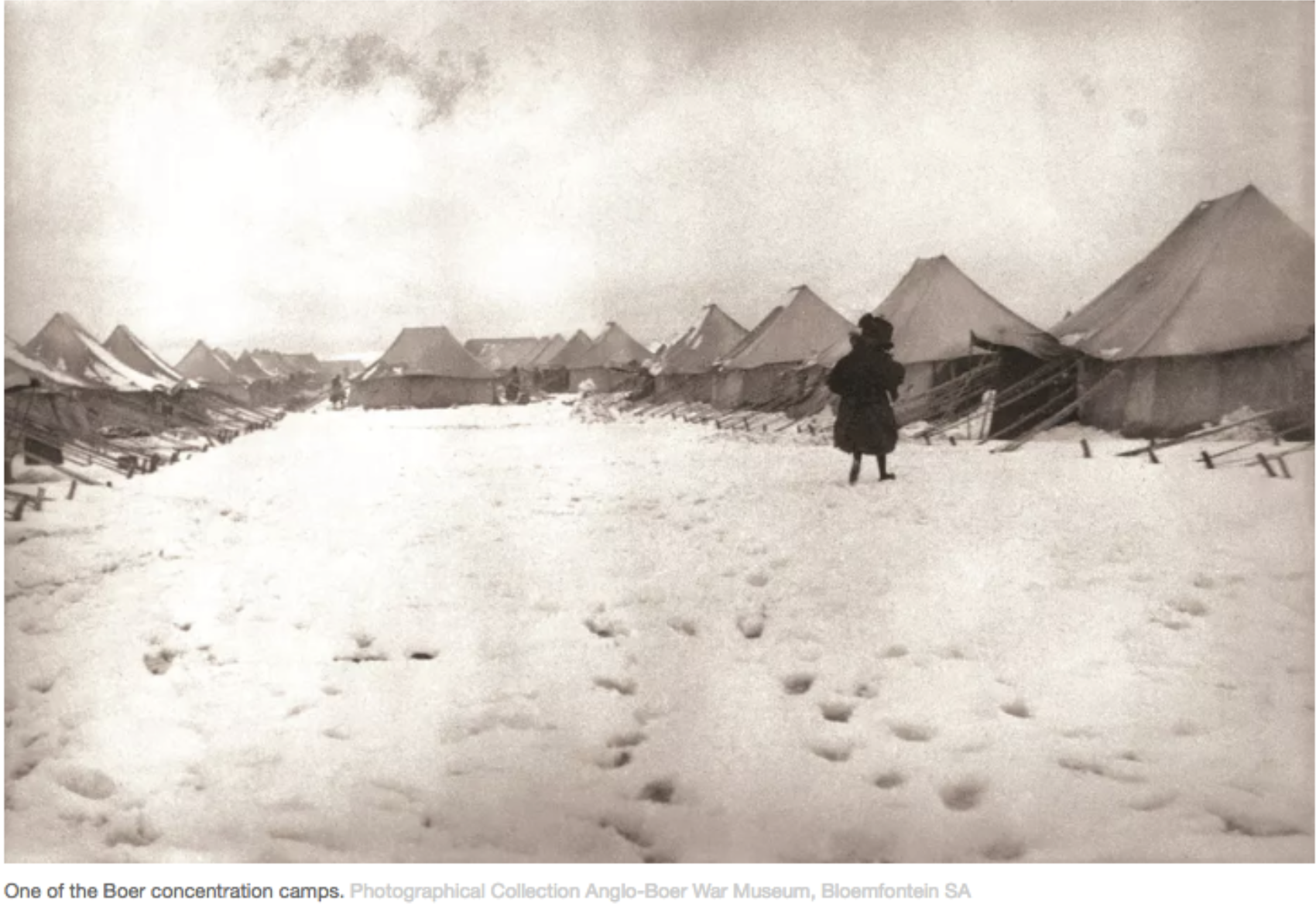
During the 2nd Boer War (1899–1902) the British forced men, women and children (mainly Boers) into concentration camps. Much of the high veldt is at an altitude of 4,000–6,000 feet above sea level and, as this image shows, susceptible to cold and wintry conditions.
In 1910 the Union of South Africa was formed as a self-governing Dominion in the British Empire. The Union was designed to consolidate British and Afrikaner interests in ruling over the Black populations in a racially segregated polity designed for maximum extraction of profit from mining, farming and other industrial pursuits. The African National Congress was founded in 1912 to assert the rights of Africans.
Despite this ‘union’ of a white South Africa, there was nevertheless a continuing tension between the British and the Dutch Afrikaners or Boers. Soon after, in 1918, Afrikaners founded the Afrikaner Broederbond (Afrikaner Brotherhood), a secret society not unlike the Freemasons whose purpose was to populate all branches of government with white Christians, preferably of the Dutch Reformed Church and of Afrikaner heritage. With the rise of fascism in Europe — in Italy, Spain and Germany — a military organization called the Ossewabrandwag (Ox-wagon Sentinels) was founded in 1939 on National Socialist principles, in lockstep with their German counterparts. Many Ossewabrandwag and some Broederbond members and affiliates were imprisoned during WW2 as being potentially hostile to the interests of the British and their allies.
In 1948, the all-white electorate reflected the animus that had built up over the years and during the war, voting for the National Party as the majority in government, many members of which had been former members of the Broederbond. It was the National Party that introduced legislation enshrining the concept of apartheid that institutionalized racial segregation and white supremacy. The Group Areas Act and Pass Laws segregated the population geographically by race, placing Africans in townships that later developed into bantustans far removed from the white population and workplaces. Job segregation, passbooks, curfews, detentions without trial, torture and starvation were all instruments of the apartheid regime. From 1948 all the way through 1994 and the first democratic elections, 46 years in all, apartheidwas imposed with savage brutality in a system now dominated by white Afrikaner culture — supported to the end by the interests of international capital and Western governments. It is not hard to see that the Afrikaners, who had suffered at the hands of the British, now felt victorious. The religious and racial convictions underwriting the rule of white supremacy had been vindicated.
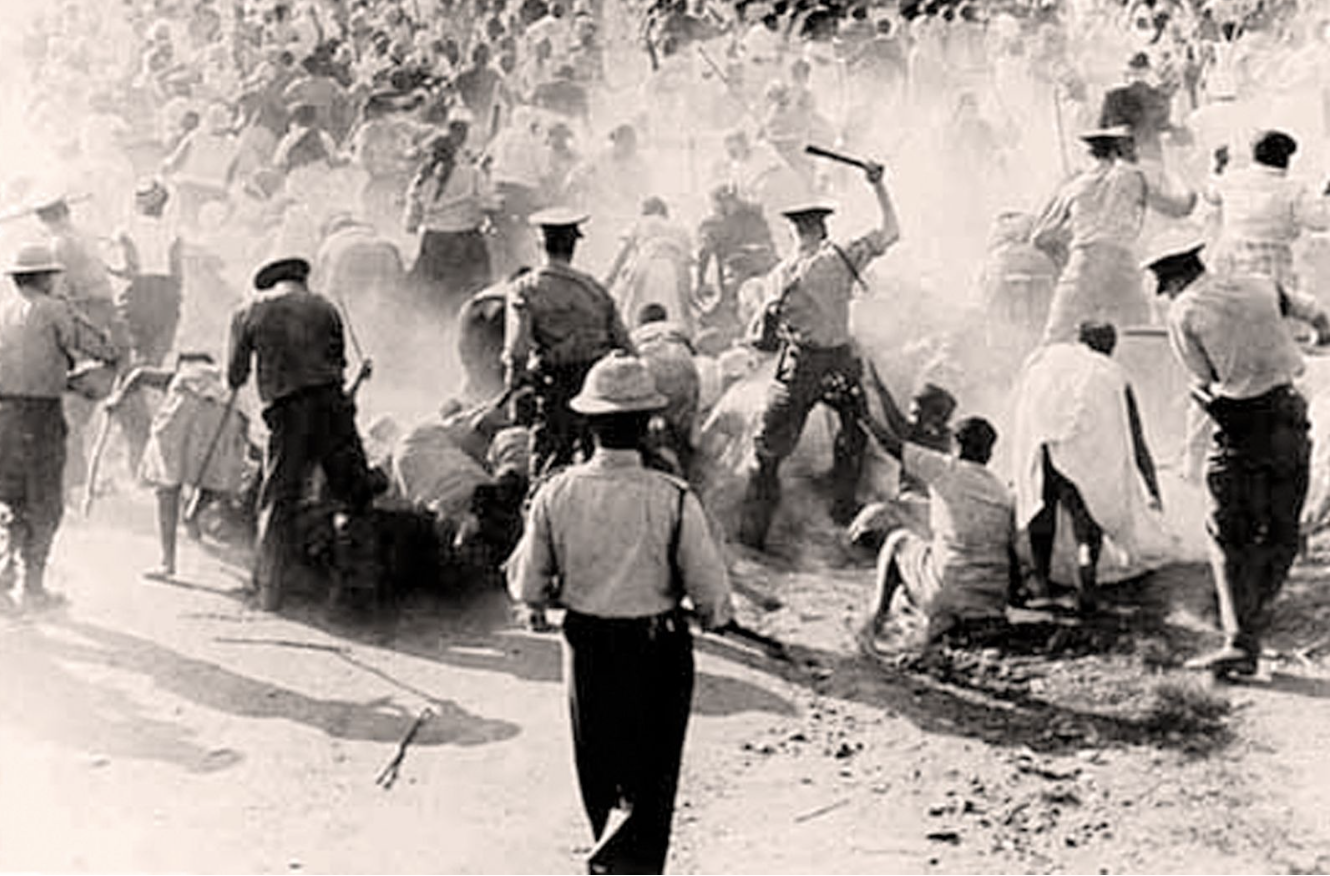
At a peaceful demonstration against the Pass Laws at Sharpeville (south of Johannesburg) on 21st March 1960, police gunned down and killed 69 demonstrators, wounding many more. This incident provoked international outrage prompting the United Nations General Assembly to establish the International Day for the Elimination of Racial Discrimination and adopting the International Convention on the Elimination of All Forms of Racial Discrimination on 21 December 1965.
But in the early 1990’s, bending to international pressure and continuing resistance by the ANC (led by some who had been almost three decades behind bars), the National Party under the premiership of FW DeKlerk was forced to concede to democratic rule. To extend the vote to Africans, Indians, Chinese, Coloreds and others who constituted the “non-white” world of apartheid, was another bitter defeat for the diehard Afrikaner.
It is from this point, building on almost two centuries of racist and colonialist pathologies, that the Afrikaners once again characterize themselves as victims. The fact remains however that 30 years after the end of apartheid, according to the World Bank, South Africa remains the most economically unequal country in the world[iii], the disparities correlating with racial groups[iv]. While the population is 80% Black and 8% White, a typical Black household has only 5% of the wealth of a typical White Family. The top 20% of the population holds nearly 70% of the income. Collectively, both the top 20% and the middle class leave less than 5% of the income for the bottom 20% of the population. As for land ownership, a key issue for the allegedly oppressed Afrikaner farmers, the statistics are that Whites — 8% of the population — own 72% of the land whereas Blacks — 80% of the population — own only 4% of the land. It is the government’s attempt at land reform and land distribution (with compensation)[v] that has the Afrikaners — and now Trump and his acolytes — crying genocide.
Why should this history of a far-off land be of any interest to the Trump administration? This is where the PayPal trio of Elon Musk, Peter Thiel and David Sacks come in. These three are all US residents and all influential in the Republican Party through their wealth. They all have roots in apartheid South Africa in the 1970’s[vi] at the time of prime minister John Vorster, an Afrikaner former (and unrepentant) member of the Ossewabrandwag [vii]. From this background and this era, what these three technofascists have in common is a version of white supremacy self-described as Christian Nationalism[viii]. This philosophy was the driving force in Vorster’s South Africa just as it has become a driving force in today’s MAGA movement and Trump’s America.
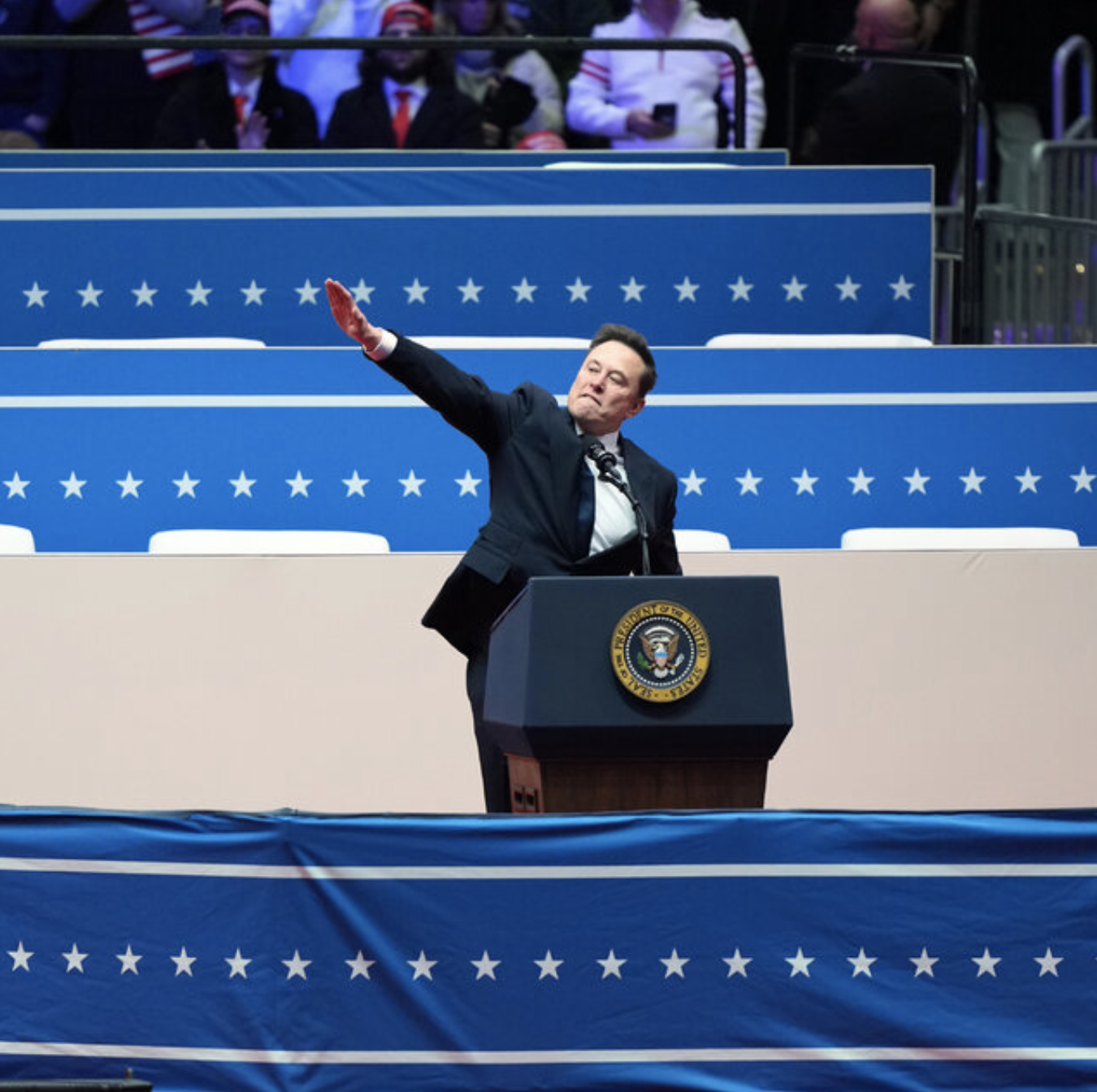
At a celebration of President Trump’s inauguration on 20th January 2025, Elon Musk gave a convincing impression of a Nazi salute. This was not a random gesture.
So it is that land reform proposals by the South African government, redistributing farmland, with compensation, to a largely landless peasantry has prompted Trump to single out this single group of white people as worthy of priority admission to the United States as oppressed immigrants.Despite murders of white farmers being few and far between in a generally violent country[ix], Trump and his acolytes deem these white Christians from the Transvaal and the Oranje Vrijstaat to be victims of a genocide. What this history and the current policy of the Trump administration show us is that this latest implant of white supremacy, so long in the ascendant, will not relinquish its grip without a struggle.
_____________________________________________________________
[i] Following the democratic elections, the Transvaal has been divided into four provinces: Gauteng, Limpopo, Mpumalanga and North West. The Orange Free State is now the Free State / Vrijstaat.
[iii] “New World Bank Report Assesses Sources of Inequality in Five Countries in Southern Africa”. World Bank. Retrieved 2025–02–26.
[iv] https://www.tandfonline.com/doi/full/10.1080/09538259.2024.2318962#d1e452
[v] https://en.wikipedia.org/wiki/Land_reform_in_South_Africa
[vi] https://www.theguardian.com/technology/2025/jan/26/elon-musk-peter-thiel-apartheid-south-africa
[viii] Notable exceptions to the prevailing ethos of Afrikaner white supremacy in South Africa include Bram Fischer Q.C., a prominent lawyer who worked underground with the ANC and was sentenced to life imprisonment in 1966 (see “What I did was Right” 1966); and Beyers Naude, a dominee of the Dutch Reformed Church who, awakened to the injustice of the system for which his church had been a promoter and apologist, relinquished his position and worked thereafter for social and economic liberation for the rest of his days.
[ix] https://www.cnn.com/2025/05/21/politics/fact-check-white-farmers-south-africa-trump
First published on Medium, June 1st 2026